

A U.S. developer can cost roughly $95,000 to $330,000 in the first year once salary, benefits, payroll taxes, recruiting, and ramp time are included. A senior developer in LATAM may earn around $78,000 to $98,000 annually before local employer costs, recruiting fees, and onboarding are added.
That distinction answers the actual version of “how much does it cost to hire a developer?” The offer letter is only the starting point. Your budget also absorbs employer contributions, benefits, equipment, recruiting, delays, and the time it takes a new engineer to become productive.
For a Series A to Series C company, the right comparison isn't salary versus salary. It's fully loaded first-year cost versus fully loaded first-year cost.
The First-Year Price Tag of Hiring a Developer in 2026
A U.S. developer can cost $95,000 to $330,000 in the first year, once compensation, benefits, recruiting, employer costs, and ramp time are included, according to 2026 first-year hiring cost estimates. The range is wide because a junior generalist and a senior platform engineer create very different budget commitments.
Planning a hire?
Talk through the best hiring option
This article usually leads to one practical question: should you use it recruitment or staffing? We can help you choose quickly.
Simple next step
Start with it recruitment and we will help you pick the best hiring setup.
A 2026 developer cost model puts junior U.S. developers at roughly $100,000 to $150,000 in first-year total cost, mid-level developers at $150,000 to $215,000, and senior developers at $205,000 to $290,000. Those figures show why the offer letter is only one line in the hiring budget. Finance also needs to account for benefits, payroll costs, equipment, recruiting, onboarding, and lost output during ramp.
For LATAM hiring, a senior developer's annual salary planning range can be $78,000 to $98,000, based on monthly senior compensation of $6,500 to $8,200 in a 2026 LATAM talent report. Treat that as a salary benchmark, not the final employer bill. Add recruiting, employer contributions, compliance, equipment, and onboarding.
Four inputs determine the all-in number:
Salary band: Seniority and specialization drive the largest cost line.
Employer overhead: Benefits, payroll taxes, statutory contributions, and equipment raise total cost.
Recruiting model: A percentage-based agency fee grows with salary. A fixed-fee search makes the cost easier to forecast and can save more on higher-salary hires.
Ramp time: The seat costs money before the engineer delivers at full capacity.</li>
Practical rule: Compare hiring options only after pricing every cost from requisition approval through dependable production output.
LATAM is not automatically cheaper. Choose it when the required skills, working hours, communication needs, and total employer cost support the location.
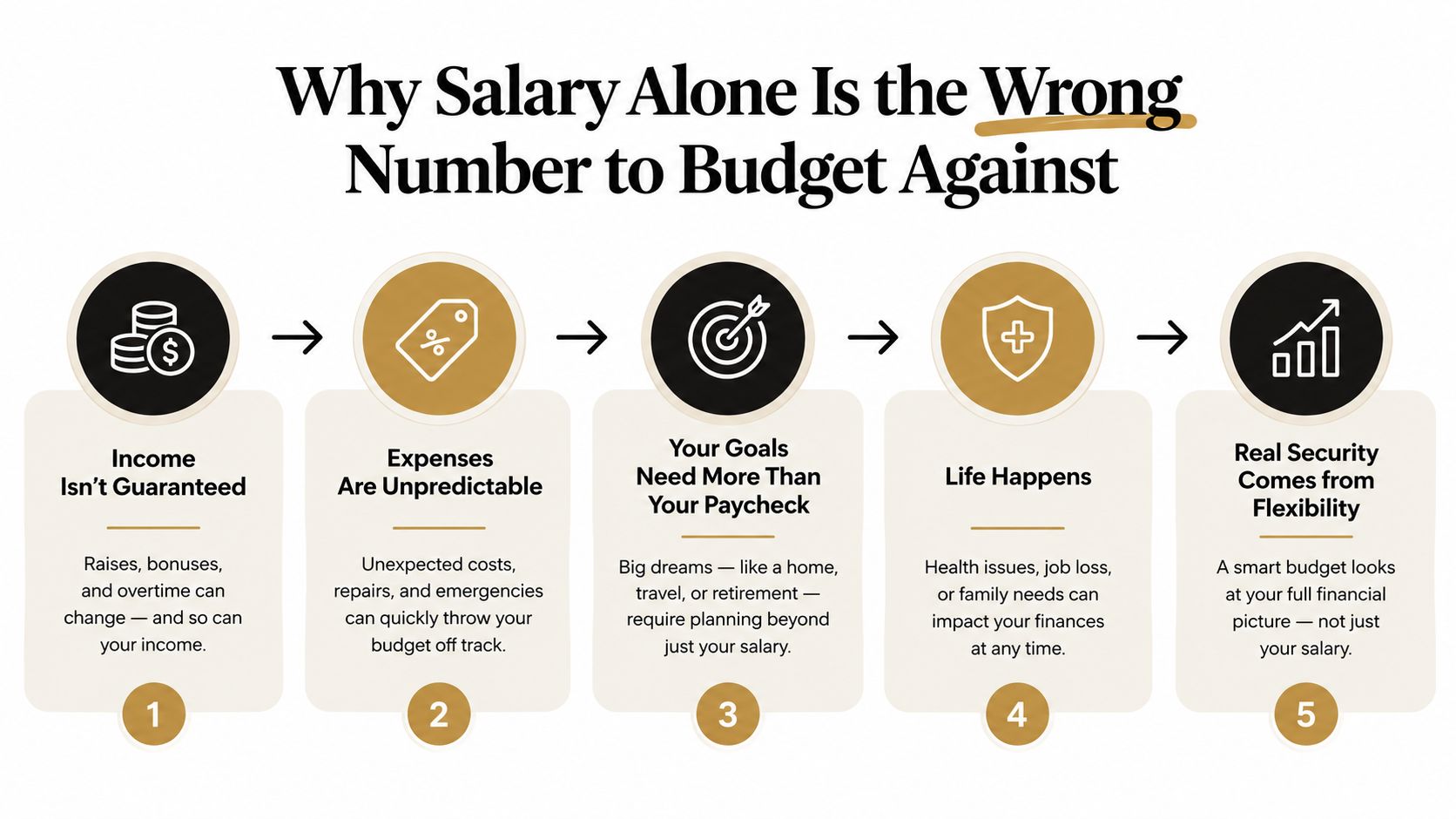
Why Salary Alone Is the Wrong Number to Budget Against
A $120,000 offer doesn't mean your company is hiring a $120,000 employee. It means you're committing to a cost base that expands through benefits, employer taxes, recruiting, equipment, onboarding, and lost output during ramp.
For example, a mid-level U.S. offer at a $120,000 base salary could become materially more expensive once employer costs and hiring friction are included. A precise total depends on the company's benefits plan, location, payroll structure, recruiting agreement, and onboarding quality. The Bureau of Labor Statistics wage data also shows why one generic technical salary benchmark isn't enough: programmer compensation varies significantly across the distribution, while software developer, QA analyst, and tester compensation uses a different occupational grouping.
Use this calculation sequence before approving the requisition:
Start with base compensation. Set the range for the actual role, not the title. A production-critical security engineer should not be budgeted like a generalist programmer.
Add employer burden. Include payroll taxes, benefits, statutory contributions, equipment, software, and any local employment costs.
Add the recruiting model. A percentage-based search fee increases as the salary increases. A fixed-fee arrangement is easier to forecast.
Price the empty seat. A delayed start can leave senior engineers covering incidents, reviews, and delivery work.
Price the ramp. A new hire's salary begins on day one, but their full contribution arrives later.</li>
The 2026 global developer rate analysis reinforces the budgeting problem from another angle. U.S. freelance full-stack developers are commonly priced around $85 to $135 per hour, while senior nearshore and offshore engineers are often positioned as materially less expensive than comparable U.S. hires. Contractor pricing can look high beside salary, but it may remove some recruiting, benefits, and long-term employment commitments.
The important question isn't whether a candidate's salary looks affordable. It's whether the complete cost fits the value and urgency of the role.
Seniority-Based Cost Bands for U.S. and EU Hires
Seniority changes the first-year bill, not just the salary. Junior hires require more supervision, mid-level engineers usually balance delivery and guidance, and senior engineers command higher compensation because they can work independently and influence technical decisions.
For U.S. planning, the 2026 first-year cost estimate gives all-in ranges of $100,000 to $150,000 for junior developers, $150,000 to $215,000 for mid-level developers, and $205,000 to $290,000 for senior developers. A separate 2026 salary benchmark places average U.S. developer compensation between $120,000 and $180,000, with senior developers in major technology hubs reaching $180,000 to $280,000.
Use the U.S. figures as planning anchors, not universal quotes. European employer cost depends on payroll obligations, healthcare, leave, pension requirements, and employment structure. A Berlin hire needs a country-specific budget, and a remote employee can create different compliance costs across jurisdictions.
For unusual skill profiles, run salary benchmarking before approving the range. The BLS reports a $134,040 median annual wage for software developers, QA analysts, and testers in May 2025. Computer programmers had a $100,390 median annual wage in the same period, according to BLS occupational data. These figures show why job family and specialization must shape the budget.
A percentage-based recruiting fee also rises with salary. A fixed-fee search gives the CTO a clearer all-in number per hire, especially for senior roles. Choose the model after comparing the fee, employer costs, and expected ramp time, not from base salary alone.
LATAM Developer Costs by Country and Seniority
LATAM compensation varies by country, role, seniority, and exposure to international employers. The 2026 LATAM salary guide gives annual country ranges of $32,000 to $50,000 for Brazil, $30,000 to $48,000 for Mexico, $28,000 to $45,000 for Colombia, and $25,000 to $42,000 for Argentina. Senior roles across the region can reach $42,000 to $100,000 annually.
Those figures are compensation ranges, not complete employer cost. Add recruiting, local contributions, benefits, payroll administration, equipment, and onboarding before comparing the role with a U.S. employee.
A LATAM talent report places mid-level developers at $4,000 to $5,200 per month and senior developers at $6,500 to $8,200 per month. That same report says LATAM hiring can cost 50% to 70% less than an equivalent U.S. hire at the same seniority, but the saving depends on the role and the employment setup.
The savings case weakens for architects with rare U.S. market experience, production-critical DevOps specialists, and machine learning profiles competing for global demand. Currency movement, equity expectations, and specialized skills can also change the final annual cost.
Use software development salary data for LATAM to set a country-specific range rather than applying one regional average to every position.
Recruiting Fees, Fixed Pricing, and RPO Compared
Recruiting fees can turn a manageable salary budget into a much higher first-year hiring cost. Compare the full placement bill, internal interview time, recruiter capacity, and repeated-search risk before choosing a model. A high salary does not automatically justify a percentage-based agency fee.
Contingency agencies commonly charge 15% to 25% of first-year base salary and collect payment when the candidate starts. For a senior U.S. developer, that percentage can add a large cost to the hire. Fixed-fee recruiting models set the placement charge before the search begins, usually $15,000 to $35,000 per placement depending on seniority.
The break-even calculation is direct. Compare the percentage fee with the fixed quote at the candidate's expected salary. A fixed fee usually becomes more attractive as compensation rises, while contingency recruiting may remain practical for occasional or uncertain searches. Include sourcing time, interview participation, recruiter management, and the cost of restarting a failed search.
RPO fits a company building a repeatable hiring function. A team scaling from five to fifty engineers may need outside recruiting capacity, consistent process, and predictable delivery. A steady-state company with occasional openings may spend less with internal sourcing or a targeted contingency search.
The right model depends on first-year hiring volume, role scarcity, salary level, and the amount of recruiting work your team can absorb. Do not compare headline fees alone.
Budgeting rule: Ask every provider to show the placement fee, replacement terms, payment schedule, and expected hiring workload on one page. A low headline fee can become expensive if the team must repeat the search.
Time-to-Hire and Ramp Time as Hidden Cost Drivers
A developer costs money before the first pull request. The company pays for the open seat through delayed delivery, overloaded reviewers, deferred roadmap work, and incident coverage.
A BLS software developer profile helps anchor the role's market context, but it doesn't calculate the cost of delay inside your organization. Your finance model should estimate what the team can't deliver while the position remains open.
Ramp time creates the second leak. A senior engineer may understand the technology quickly but still need time to learn architecture, deployment controls, customer behavior, incident procedures, and decision history. Mid-level and junior hires usually require more structured guidance before they can own production work independently.
Track the cost with three inputs:
Seat vacancy: Estimate the value of the work blocked while the requisition is open.
Team drag: Include mentoring, interview participation, code review, and temporary ownership carried by existing staff.
Ramp gap: Estimate the difference between salary paid and useful output delivered during onboarding.</li>
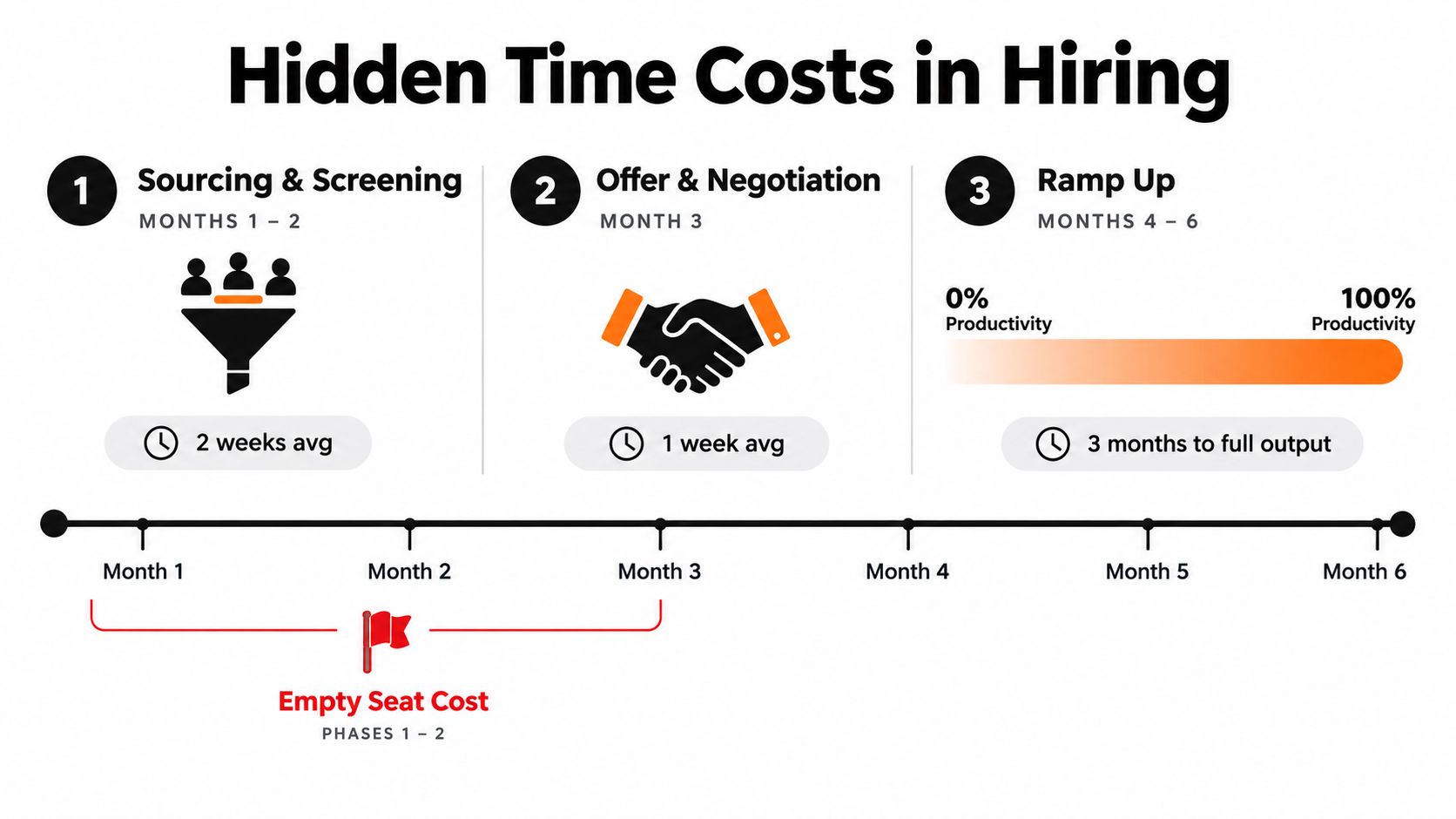
The right response isn't to rush every hire. It's to identify where speed has economic value. A platform role blocking a launch deserves a different process from a nice-to-have internal tool. Review time-to-fill metrics alongside quality-of-hire measures so speed doesn't become the only target.
The cost model should also include the quality of onboarding. A clear environment setup, accessible documentation, assigned technical mentor, and defined first project can reduce wasted time without lowering the hiring bar.
Two Total-Cost Scenarios Side by Side
Compare first-year cost, not salary. The U.S. senior planning band is $205,000 to $290,000 all-in, based on the 2026 first-year developer cost estimate. The LATAM compensation range is $78,000 to $98,000, based on the LATAM talent report. Use the table to test the remaining cost lines against your hiring model.
The U.S. hire makes sense for customer-facing work, local market context, and production-critical ownership. The premium buys domestic access and closer collaboration, but percentage-based recruiting can push the final bill higher.
LATAM can reduce compensation cost while preserving useful time-zone overlap for U.S. teams. Assess English communication, ownership, production experience, core-hour availability, and the legal employment route before comparing offers.
Fixed-fee recruiting is easier to forecast. Percentage-based agencies may be worthwhile for scarce profiles, but their fee rises with the candidate's compensation. Compare both against replacement guarantees, equity, contractor classification, and distributed-team management before calling the gap savings.
Choosing the Right Hiring Model for Your Team
Choose the market and engagement model based on the work, not on a headline salary.
For mission-critical platform work, on-call rotations, deep U.S. customer context, or a role that owns an irreplaceable system, a U.S. senior hire can justify an all-in cost above $250,000 when the alternative is prolonged delivery risk. The premium buys proximity, local context, and access to a competitive senior market. It doesn't remove the need for structured interviewing.
For product features, internal tooling, and growth engineering with documented systems and overlapping working hours, a senior LATAM hire can be the more rational option. A realistic planning band of $110,000 to $140,000 all-in should be validated against role scope, country, benefits, recruiting, and onboarding rather than treated as a guaranteed price.
European hiring often works as the middle route for companies that need proximity to U.S. and European markets. The nominal salary advantage can shrink after statutory benefits, payroll administration, and local employment costs are included.
Use this decision checklist:
Role criticality: Does failure affect production, revenue, security, or customer trust?
Time-zone need: Does the engineer need live overlap, or can the team work asynchronously?
Budget ceiling: Can the company absorb the full first-year cost, not just the advertised salary?
Ramp tolerance: How much delayed output can the team afford before the hire becomes productive?
Hiring volume: Will percentage fees remain sensible if the company hires repeatedly?</li>
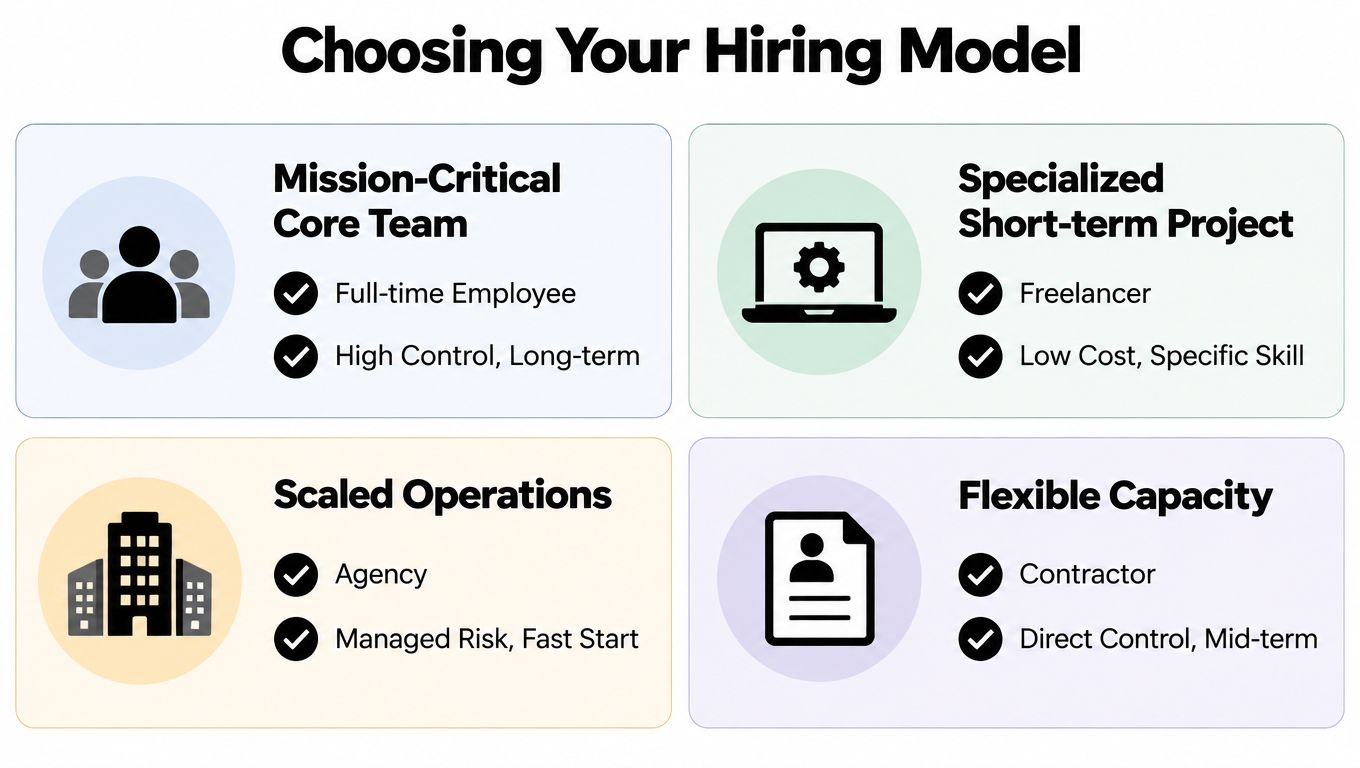
A remote staffing model can suit teams that need flexible capacity, provided ownership, communication, security, and employment responsibilities are explicit. The two questions that matter most are practical: what does ramp time cost your team per week, and can your recruiting model scale beyond three hires a year without percentage fees consuming the budget?
GENTY recruitment helps technology companies hire developers and other technical talent across Latin America through fixed-fee recruiting, RPO, salary benchmarking, and curated shortlists. Visit GENTY recruitment to compare a predictable hiring approach with the full first-year cost of your current model.