

Choosing the right tech roles for your startup is harder than it looks. Market demands shift fast, AI is reshaping which skills actually matter, and the pressure to build lean but capable teams has never been greater. At the same time, a growing number of US and European startups are discovering that Latin America offers a compelling answer: senior engineers who are technically sharp, English-speaking, and available in overlapping time zones. This article walks you through a practical framework for selecting roles, a breakdown of the most in-demand positions, and a step-by-step approach to hiring and vetting LATAM talent that actually delivers results.
Table of Contents
- How to evaluate and select the right tech roles
- Top tech roles to hire for FinTech, AI, and SaaS
- How to successfully hire and vet LATAM tech talent
- Role-by-role recommendations for FinTech, AI, and SaaS startups
- A hiring manager’s perspective: What actually works (and what doesn’t)
- Hire the top LATAM tech talent for your startup
- Frequently asked questions
Key Takeaways
How to evaluate and select the right tech roles
Now that we’ve set the stage, let’s look at how to choose which tech roles make the most impact for your specific situation.
The most common mistake founders make is hiring based on what looks impressive rather than what the business actually needs right now. A Series A SaaS startup scaling its product does not need the same team as a pre-revenue AI company still validating its core model. Your tech stack, business stage, and 12-month growth plan should drive every hiring decision.
When evaluating which roles to prioritize, consider these key selection criteria:
Before you start hiring
Check location, salary, and hiring fit
If you are moving from research to action, start with the market basics so your hiring plan is clearer.
- Tech stack alignment: Hire engineers who already know your core languages and frameworks. Onboarding a developer onto an unfamiliar stack costs weeks of productivity.
- Business stage: Early-stage startups need generalists who can move fast. Growth-stage companies need specialists who can build scalable systems.
- Revenue impact: Prioritize roles that directly affect your product’s reliability, speed, or user experience. Platform engineers and backend developers often have outsized impact at this stage.
- Team gaps: Audit your current team’s weaknesses honestly. If your engineers ship fast but deployments break often, a DevOps engineer is more valuable than another full-stack hire.
Remote hiring adds another layer of complexity. The tech job market in 2026 shows that AI is increasing demand for senior engineers who exercise judgment, not just write code, while remote roles have become more selective post-2022. Platforms like Upwork can produce ghosting and poor fit without structured trials. LATAM talent, by contrast, offers real advantages over Asian alternatives: better timezone overlap with US and European teams, stronger English proficiency, and cultural alignment that makes async collaboration smoother.
A solid remote hiring framework will save you months of wasted effort. Structure your process before you post a single job description.
Pro Tip: Always run paid trials of one to two weeks before committing to a full-time hire. This single step eliminates the majority of poor-fit situations that plague remote hiring.
Top tech roles to hire for FinTech, AI, and SaaS
With criteria set, here are the roles most sought after by startups in 2026, and how they stack up for remote hiring from Latin America.
The top tech roles in demand for FinTech, AI, and SaaS startups cluster around six core positions: AI/ML Engineers, Full-Stack and Backend Developers, Data Engineers and Scientists, Platform and DevOps Engineers, Security Engineers, and AI Product Managers. Each one carries a distinct set of responsibilities and a different level of urgency depending on your vertical.
Here is a quick breakdown of what each role actually does in a startup context:
- AI/ML Engineers: Build, train, and deploy machine learning models. Critical for any product where prediction, personalization, or automation is core to the value proposition.
- Full-Stack and Backend Developers: Handle both product interfaces and server-side logic. Essential for SaaS startups that need to ship features fast without sacrificing stability.
- Data Engineers and Scientists: Design data pipelines and extract business insights. Indispensable for FinTech platforms that rely on transaction data and risk modeling.
- Platform and DevOps Engineers: Manage infrastructure, CI/CD pipelines (continuous integration and delivery), and deployment reliability. Often the difference between a product that scales and one that breaks under load.
- Security Engineers: Protect systems against vulnerabilities and ensure regulatory compliance. Non-negotiable for FinTech and any startup handling sensitive user data.
- AI Product Managers: Bridge the gap between technical AI teams and business strategy. Increasingly valuable as AI drives business growth and product decisions become more data-driven.
The LATAM developer advantages become especially clear when you compare cost and collaboration quality across regions.
“The assumption that AI will simply replace junior engineers misses the bigger story. What we’re actually seeing is a shift in demand toward senior engineers who can evaluate AI-generated code, make architectural decisions, and own outcomes. That judgment cannot be automated.” This perspective reflects a growing consensus among engineering leaders who have watched AI tools raise the floor on code quality while simultaneously raising the ceiling on what senior talent is expected to deliver.
How to successfully hire and vet LATAM tech talent
Once you’ve chosen which roles to fill, here’s how to reliably source, vet, and retain top LATAM talent without the common pitfalls.
The hiring process for remote LATAM engineers works best when it follows a structured sequence. Skipping steps, especially the trial phase, is where most startups lose time and money.
- Define the role with precision. Write a job description that specifies your tech stack, the seniority level you need, expected deliverables in the first 90 days, and your async communication tools. Vague descriptions attract mismatched candidates.
- Source through vetted platforms. Generic job boards produce volume but not quality. Platforms like Toptal, BairesDev, Howdy, and Revelo specialize in pre-screened LATAM talent and offer 40 to 60% savings compared to US or European equivalents. Each platform has its own vetting rigor, so choose based on your role’s seniority and domain.
- Run a structured technical interview. Use a take-home assessment or live coding session that reflects real work, not abstract puzzles. For FinTech roles, include domain-specific scenarios.
- Conduct a paid trial of one to two weeks. Assign a real but low-stakes project. Evaluate code quality, communication cadence, and how the candidate handles ambiguity. This step alone filters out candidates who perform well in interviews but struggle in practice.
- Assess soft skills explicitly. Async communication, self-direction, and the ability to flag blockers early are as important as technical skill for remote roles. Ask behavioral questions that surface these traits.
- Onboard with structure. Provide documentation, clear first-week goals, and a dedicated point of contact. Remote onboarding that lacks structure leads to disengagement within the first month.
Here is a comparison of the major platforms for sourcing senior LATAM talent:
For FinTech specifically, vetting must go deeper than standard technical interviews. FinTech talent acquisition requires risk-aware developers who understand idempotent APIs (APIs designed to handle duplicate requests safely), fraud detection logic, and payment system architecture. Vet candidates with domain-specific tasks such as designing a payment endpoint or walking through a fraud detection scenario. Legal compliance is also a real consideration: using an EOR (Employer of Record) service like Deel simplifies contracts, taxes, and local labor law compliance across LATAM countries.
Pro Tip: When evaluating async communication, send candidates a written brief with a deliberate ambiguity and see how they respond. Do they ask a clarifying question or make an assumption and proceed? The best remote engineers ask first.
Explore remote LATAM talent tips and broader LATAM hiring insights to build a process that scales with your team.
Role-by-role recommendations for FinTech, AI, and SaaS startups
Now, let’s match these roles with startup-specific scenarios and highlight common traps to avoid.
The right hire depends heavily on your vertical. Here is how the role priorities break down by industry:
FinTech startups should prioritize Security Engineers and Backend Developers first. Payment infrastructure demands reliability and compliance from day one. Data Engineers become critical as transaction volumes grow and risk modeling needs improve. Hiring a junior developer for core payment logic is one of the most expensive mistakes a FinTech founder can make.
AI startups need ML Engineers and Platform/DevOps Engineers as foundational hires. Without solid infrastructure, even the best models fail in production. AI Product Managers become essential once the product reaches early users and needs to translate model capabilities into features customers actually want.
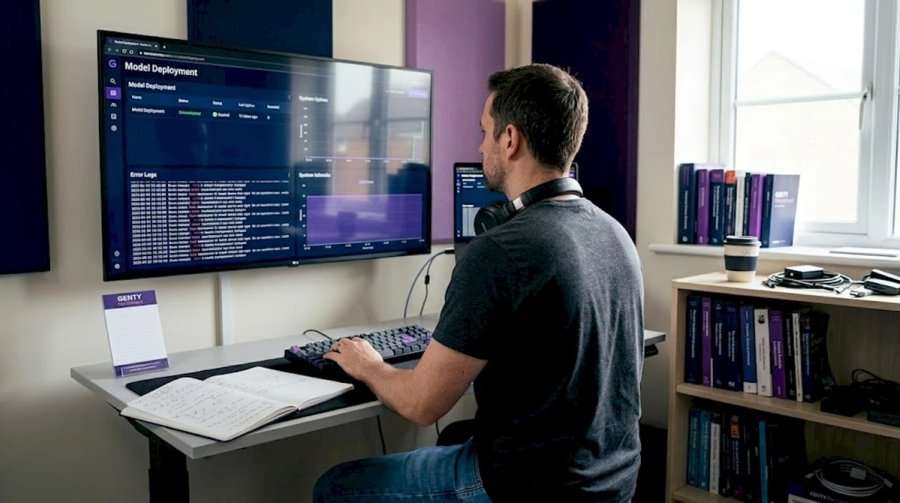
SaaS startups benefit most from Full-Stack and Backend Developers early on, with DevOps Engineers added as the product scales. The ability to ship fast and iterate based on user feedback is the core competency at this stage, and versatile engineers who own both frontend and backend work are invaluable.
A critical statistical reality shapes all of these decisions. Senior engineers in the US and EU command 60 to 70% more in compensation than equivalent talent in LATAM, and that gap widens at the senior level. AI is simultaneously reducing demand for junior roles while pushing senior and platform engineering demand higher. Nearshore hiring from LATAM outperforms offshore alternatives from Asia for collaboration-heavy roles precisely because of the time zone alignment.
Common pitfalls to avoid across all verticals:
- Hiring juniors for mission-critical work to save money. The short-term savings are erased by bugs, delays, and rework.
- Skipping domain-specific vetting. A strong generalist developer may not understand the nuances of financial APIs or ML pipeline architecture.
- Ignoring soft skills. Technical proficiency without async readiness and communication discipline creates friction that compounds over time on remote teams.
- Underinvesting in onboarding. The first two weeks determine whether a remote hire integrates or drifts.
LATAM engineers also bring relevant experience in Web3 and adjacent domains, which matters for FinTech startups exploring blockchain-based payment rails or tokenized assets. Pairing that domain knowledge with AI tools for startup operations can accelerate your team’s output significantly.
A hiring manager’s perspective: What actually works (and what doesn’t)
Having explored what to look for, here’s an unfiltered perspective on hiring practices that actually deliver results.
The conventional wisdom in remote hiring focuses almost entirely on technical screening. Coding assessments, system design interviews, GitHub profiles. These matter, but they are not the primary predictor of success for remote LATAM engineers. What actually determines whether a hire works out is a combination of async readiness, ownership mindset, and the quality of your onboarding process.
Most startups that struggle with remote hires made the same mistake: they optimized for finding talent and then neglected the integration process. A senior engineer who joins a team with no documentation, unclear expectations, and no structured first week will underperform regardless of their technical ability. The problem is not the hire. It is the environment.
The culture and work ethic that LATAM engineers bring to remote teams is genuinely strong, but it needs to be matched by equally strong management practices on your side. Engineers from Argentina, Brazil, and Colombia consistently report that they perform best when given clear goals, genuine autonomy, and regular feedback. That is not a LATAM-specific trait. It is what every senior engineer wants. But it is especially important in remote contexts where ambiguity compounds quickly.
The other thing conventional wisdom gets wrong is the obsession with cost savings as the primary argument for LATAM hiring. Yes, the savings are real and significant. But the startups that build the best remote teams from Latin America are not thinking about it as a cost play. They are thinking about it as a quality and speed play. They get senior engineers who are available in their time zone, communicate clearly, and integrate into product teams without the cultural friction that can slow down offshore collaborations.
Invest in onboarding as seriously as you invest in sourcing. Build documentation. Assign a buddy. Run structured check-ins in the first month. The return on that investment is measurable in retention, output quality, and team cohesion.
Hire the top LATAM tech talent for your startup
With actionable knowledge in hand, here are the next steps to secure your team’s top tech talent.
Building a high-performing remote engineering team from Latin America is entirely achievable when you combine the right role strategy with a structured hiring process. Genty Recruitment specializes in connecting US and European startups with pre-vetted, English-speaking LATAM engineers for exactly the roles covered in this article.
Whether you need an AI/ML engineer for a new model deployment, a backend developer to scale your SaaS infrastructure, or a security engineer to meet FinTech compliance requirements, the LATAM IT recruitment process at Genty is built to deliver qualified candidates faster than traditional hiring. Explore remote LATAM talent options tailored to your team’s stage and tech stack, or go directly to FinTech recruitment if compliance and domain expertise are your primary requirements. The team is ready to help you move from job description to vetted candidate in days, not months.
Frequently asked questions
What are the biggest mistakes startups make when hiring remote tech talent?
Common mistakes include skipping paid trial periods, not prioritizing soft skills like async communication, and relying solely on technical interviews. Vetted LATAM platforms consistently show that one to two week paid trials are the single most effective filter for remote hiring quality.
Why is LATAM increasingly preferred over Asia for remote tech hiring?
LATAM offers better timezone overlap with US and European teams, stronger English proficiency, and cultural alignment that makes day-to-day collaboration significantly easier. The 2026 tech job market data confirms these structural advantages over Asian alternatives for collaboration-heavy roles.
How much can startups save by hiring senior engineers from LATAM?
You can typically save 40 to 60% compared to hiring equivalent senior talent in the US or Europe, with the gap widening at the most senior levels.
What vetting process ensures quality hires for FinTech roles?
Domain-specific tasks like designing payment endpoints and testing for fraud detection logic are essential for vetting FinTech engineers, alongside standard technical assessments and an EOR setup for legal compliance.
Are there key differences in hiring for AI versus SaaS startups?
AI startups require specialists like ML engineers and platform engineers who can manage model infrastructure, while SaaS startups benefit most from versatile full-stack or backend developers who can ship product features quickly and iterate based on user feedback.