
The strongest product manager interview process tests how candidates define problems, make evidence-based trade-offs, align cross-functional teams, measure outcomes, and learn from results, not whether they recite frameworks. A degree alone is a weak proxy: 42% of product professionals held a bachelor's degree, while nearly 17% had some college or university education or no degree at all.
That finding should change how a Series A–C company evaluates PM candidates. A polished framework can be memorized. A credible account of a difficult decision, the evidence behind it, the engineering and design trade-offs, and what happened afterward is much harder to fake.
The ranked product manager interview questions and answers below are designed for CTOs, VPs of Engineering, and HR Directors hiring in the US or Europe. Use the same questions for every candidate, ask the follow-ups, and score evidence rather than presentation style. A candidate who moved from engineering, design, analytics, operations, marketing, or sales may demonstrate excellent product judgment without having followed a conventional PM career path. Approximately half of current product managers previously worked outside product management, according to a survey of product professionals and hiring practices.
Remote and nearshore collaboration adds a practical test. Can the candidate document a decision, work across time zones, resolve disagreement asynchronously, and keep engineering, design, sales, and leadership aligned without relying on constant meetings? The questions should reveal that capability quickly.
What do you need?
Choose the hiring path that fits
After reading "10 Product Manager Interview Questions and Answers", most teams compare these options before deciding how to hire.
1. Tell me about a product you built from scratch and your process
The strongest answers show how a candidate turned an uncertain customer problem into a tested product decision. They provide evidence, explain trade-offs, and separate personal ownership from the team's delivery work.
A useful answer structure is:
Discovery: Which user behavior, research finding, support pattern, or commercial signal revealed the problem?
Decision: Which segment and problem did the team choose, and what did it leave out?
Execution: How did the candidate work with design, engineering, and other stakeholders?
Measurement: What baseline, target, and guardrails showed whether the launch created value?
Learning: What changed after release?</li>
Ask for a recent example, ideally from the last 18 months. Probe with: “When did evidence challenge your initial hypothesis?” and “What would you do differently?” A candidate who names constraints, alternatives, collaborators, and post-launch learning demonstrates product judgment. A candidate who only lists shipped features gives weaker evidence.
Practical rule: Score the answer on four signals: problem clarity, quality of evidence, trade-off reasoning, and learning after launch. Senior candidates should explain why they made the decision, how they aligned others, and what they would change with hindsight. Earlier-career candidates can still score well by showing disciplined discovery and clear ownership of their contribution.
For distributed teams, ask how the candidate kept engineers aligned across time zones. Strong answers mention written briefs, decision logs, named owners, and deliberate handoffs. Ask what happened when an engineer or designer was unavailable during a key decision. Answers that explain asynchronous review and escalation show operating maturity. “We had lots of meetings” provides little evidence unless the candidate can describe how absent teammates stayed informed.
2. How do you define success for a product or feature
Ask the candidate to walk through how they chose the single metric that would determine whether a feature shipped, changed direction, or stalled. A useful answer connects that metric to a specific customer problem and business decision, rather than listing every available dashboard measure.
The candidate should select one primary metric, then add supporting and guardrail metrics. The choice depends on the product goal. Product case-study guidance on product metrics discusses measures such as daily active users, conversion rate, lifetime value, churn, net promoter score, and engagement time. The interview signal is whether the candidate can explain why one measure matters more than the others.
Look for:
Target population: Which users are affected?
Baseline: What is happening today?
Primary outcome: What change would demonstrate value?
Diagnostic metrics: Which behaviors explain movement in the outcome?
Guardrails: What negative effect must the team prevent?
Measurement plan: When and how will the team evaluate the change?</li>
For an onboarding problem, a strong candidate might choose activation as the primary outcome, then track step completion and time to first value as diagnostics. They should explain how they would monitor early retention or support contacts, since a faster flow can still leave confused users behind.
Use goal-setting frameworks for product teams as a practical extension, not a test of terminology. Ask, “Which metric surprised you?” and “Tell me about a metric that misled your team.”
Score highly when the candidate explains a measurement trade-off, such as choosing activation over engagement because it better reflects first value. Senior candidates connect the metric to investment decisions and explain when they would stop or revise the work. For distributed teams, ask how the definition was documented so people across time zones used the same event definitions, baseline, and review date.
3. Describe a time you prioritized conflicting stakeholder requests
Sales wants a one-off customization. Engineering wants reliability work. The PM must decide which request wins, explain the trade-off, and keep the relationship workable without deferring to the loudest voice. This scenario is common in Series A–C companies, where a founder, customer, or revenue target can quickly change the pressure on a roadmap.
Ask the candidate to describe:
The competing requests and the underlying customer or business needs.
The criteria used to compare them, such as customer impact, strategic fit, risk, effort, dependencies, or revenue relevance.
The people consulted and the evidence gathered before deciding.
The option selected, the trade-off made explicit, and what was postponed.
The result, including how the team checked whether the decision worked.</li>
Strong candidates show how consultation improved the decision. They involve sales, engineering, design, customer success, or founders early, then communicate the final call clearly. Look for a specific disagreement, a real constraint, and an explanation of how the candidate preserved trust after someone's request lost.
A useful example is a sales request for an enterprise-specific customization alongside an engineering case for reliability work. A strong response would test whether the customer need can be served by a reusable capability, assess the operational cost of the reliability issue, and compare the options against the company's current strategy. The candidate should state what will happen now, what will wait, and why.
A review of technology product-manager job requirements found that 76% requested previous product-management experience, with an average requirement of 3.3 years, and 93% explicitly sought strong verbal and written communication. This question tests both requirements through observable behavior: the candidate must communicate a difficult decision and secure practical follow-through.
For distributed teams, ask how the decision was recorded for colleagues across North America, Europe, or LATAM. Probe the losing stakeholder's reaction: “How did they respond, and what did you do next?” Senior candidates can explain how the choice affected future prioritization, trust, and roadmap discipline. If everyone was happy, the example may not contain a meaningful conflict.
4. Walk me through your approach to competitive analysis
When a competitor launched a pricing-page overhaul, the product team tracked customer confusion rates, not feature parity, before deciding whether to respond. That example shows what interviewers should seek: research tied to a product choice, with a measurable risk and a clear decision owner.
Ask the candidate to classify the market:
Direct competitors: Products serving a similar customer through a similar solution.
Indirect alternatives: Other ways customers solve the same problem.
Emerging threats: New technology, distribution methods, or business models that could reshape the category.
Customer alternatives: Internal tools, manual workarounds, or doing nothing.</li>
A strong answer explains how the research changed priorities. The candidate might describe a competitor launching a new capability, then show that interviews and usage evidence revealed a low-priority customer need. The team chose an underserved problem where its product had a credible advantage. Score the answer higher when it connects evidence, strategic fit, expected impact, and execution cost. Senior candidates also explain what they deliberately left unbuilt and how they reviewed that risk later.
Ask, “When did you choose not to build something because a competitor had it?” Follow with, “What evidence supported that decision?” and “What signal would have made you reverse it?” A useful competitive one-pager covers customer segment, positioning, workflow strengths, weaknesses, pricing logic if relevant, distribution, and strategic implications. A feature inventory alone signals shallow analysis.
For teams serving multiple markets, probe how the candidate tests regional assumptions. A workflow that performs well in the US may require localization, regulatory adaptation, language support, or a different partner model in Mexico, Brazil, or Europe. Strong candidates use regional evidence before proposing changes and explain how distributed colleagues contributed to the analysis.
“We need feature parity” is not a strategy. Ask which customer problem the competitor solves better, whether your users share it, and where your company can win.
5. Tell me about a time your roadmap changed significantly
A roadmap change tests a PM's accountability. Did they protect a familiar plan, or course-correct when the cost of staying put became clear? Strong candidates explain the original commitment, the evidence that changed the decision, the work already invested, and how they realigned stakeholders.
Ask:
“What did the change cost in time, budget, or team capacity?”
“Which stakeholder commitments had to be renegotiated?”
“How did you decide what to stop, continue, or defer?”
“What communication prevented different teams from acting on different versions of the plan?”</li>
A strong answer distinguishes a strategic pivot from ordinary reprioritization. A strategic pivot changes the customer problem, market, or product direction. Reprioritization changes sequencing because new information affects expected value or urgency. Both require clear communication, but their effects on teams, customers, and commitments differ.
Look for a decision memo or equivalent written record. It should cover the old plan, new evidence, options considered, recommended change, engineering and design implications, and the next measures. Distributed teams need that record because an announcement in one time zone can otherwise create conflicting interpretations.
The candidate should explain how they protected morale while acknowledging the cost of change. Cancelling work can make people feel their effort was wasted. Strong PMs identify what the team learned, explain why the decision changed, and give each group a concrete next step.
A weak response blames market conditions, leadership, or engineering. A strong one owns the original decision, describes the stakeholder reset, and shows that accountability includes changing course when the plan no longer earns its cost.
6. How do you improve a feature's user experience
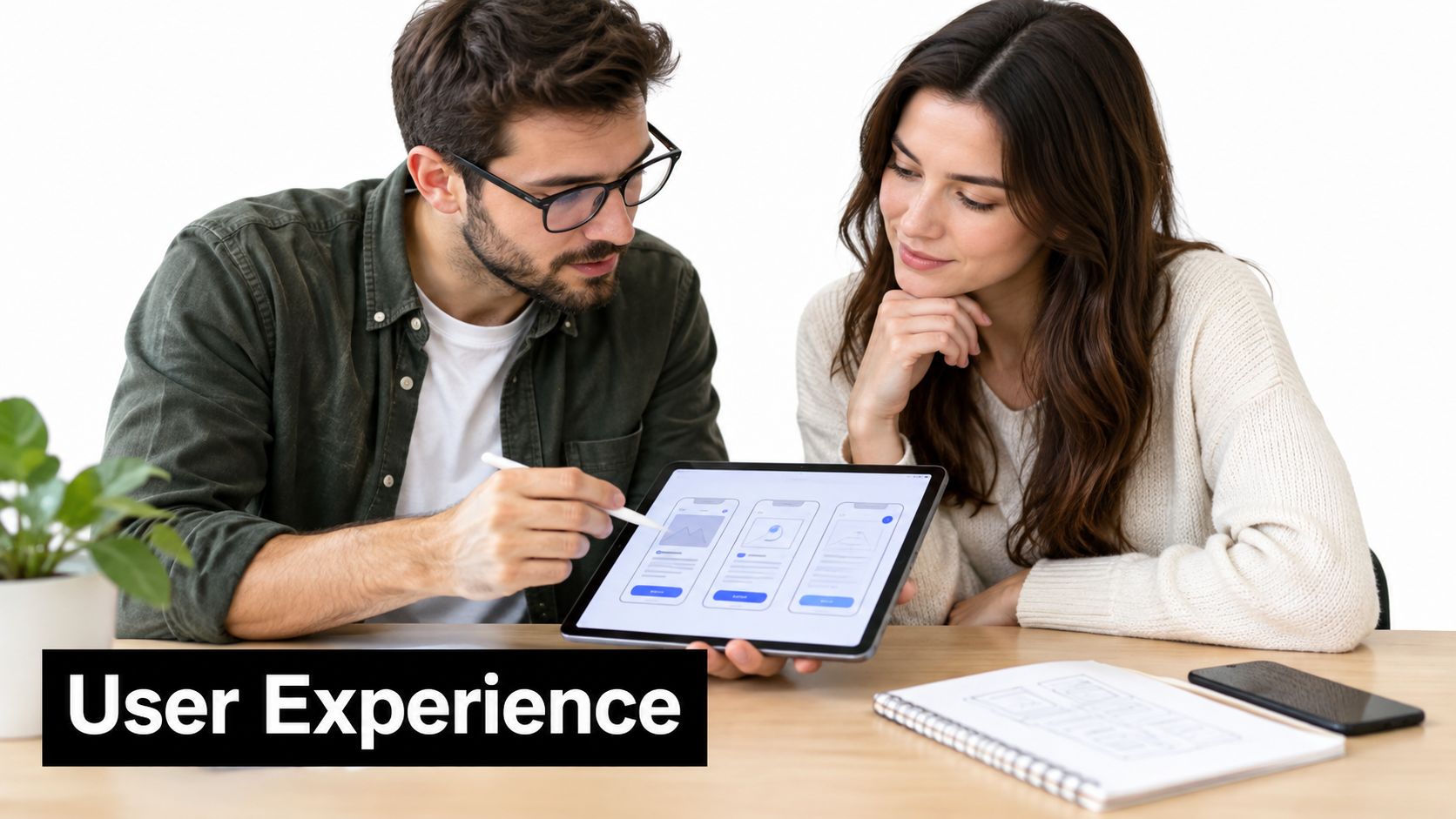
Ask the candidate to walk through a specific UX improvement, from identifying friction through validation, including the engineering constraints that forced a compromise. The answer should show how they made a user-centered decision under real delivery pressure.
Ask the candidate to explain:
How they identified the friction.
Which users were affected most.
What they observed directly.
Which alternatives design proposed.
Which engineering constraints changed the solution.
How they validated the result.</li>
A useful example might involve users abandoning setup because the product used internal technical language. A strong answer explains how the team tested plain-language alternatives, selected the smallest useful change, and measured completion alongside support contacts. “We made the interface more intuitive” provides too little evidence.
Probe the trade-off between qualitative and quantitative evidence. Research can explain why a metric moved, while behavioral data can show whether a preferred design works at meaningful scale. Ask, “What design idea did you reject, and why?” The answer reveals whether the PM can protect user clarity, accept evidence that challenges an initial preference, and work constructively with designers.
Distributed product teams require explicit collaboration habits. Ask how the PM worked with a design team in another time zone. Strong answers mention annotated prototypes, written feedback, recorded walkthroughs, decision deadlines, and an escalation path for unresolved questions. A PM hiring for this partnership may also consult UX designer hiring guidance for Latin America when building the wider team.
For scoring, give stronger marks to candidates who name the affected user, show evidence of direct observation, explain the compromise, and define how they judged the result. Senior candidates should connect the UX choice to adoption, retention, support burden, or delivery risk without claiming certainty they did not have.
A practical UX answer acknowledges imperfect solutions. A simpler flow that ships reliably may be preferable to an elegant redesign with unacceptable engineering risk.
Use a short product critique or prioritization exercise after the behavioral answer. It shows whether the candidate can apply the same reasoning in real time.
For additional context, this video accompanies the UX interview discussion:
7. How do you partner with engineers, and do you code
Ask the candidate to explain a technical trade-off from a recent project, including the options considered, constraints that shaped the decision, and how the team monitored outcomes after launch. This prompt reveals technical judgment, collaboration habits, and ownership beyond delivery.
Strong answers cover:
The customer or business outcome.
The technical options and their trade-offs.
Constraints such as reliability, latency, security, scalability, data quality, or maintenance.
Engineering's recommendation and the evidence behind it.
How the PM adjusted scope, sequencing, or launch criteria.
What the team measured after release and what changed as a result.</li>
Use a scenario such as, “Users need timely updates. What approaches could meet that need, and what would you trade away?” The candidate should clarify the problem before discussing implementation. Probe with, “What technical debt did the decision create?” and, “What did you misunderstand at first?”
Score highly when the candidate names the affected user, explains the compromise, and shows how engineering shaped the decision. Senior candidates connect the choice to delivery risk, reliability, adoption, or future product flexibility. They also acknowledge uncertainty and distinguish a recommendation from a confirmed result.
Watch for two risks. A PM who leaves every technical question to engineering may struggle with informed prioritization. A PM who overrides engineering expertise without evidence may create delivery and quality problems. Coding experience can help in some roles, but the interview should assess the technical depth the role requires.
For a technical product role, align expectations before the interview and use a more demanding assessment. Technical product manager hiring guidance helps clarify product judgment, technical literacy, and engineering responsibility.
For distributed teams, ask how the candidate prevented rework when product and engineering were offline at different times. Look for outcome-based requirements, acceptance criteria, decision records, dependency mapping, and early technical discovery.
8. How do you operate with distributed and nearshore teams
Test distributed collaboration by asking candidates to show how they make decisions visible, handle delayed responses, and adapt research to different time zones and markets. For Series A to C companies, these signals reveal whether a PM can maintain momentum without relying on constant meetings.
Ask for a concrete example involving teams in different locations, then probe with:
“How did you align a team spread across time zones?”
“Which decisions were documented, and where?”
“How did you handle an issue that needed same-day escalation?”
“How did you explain a metric to teams serving different markets?”
“When did local customer behavior require a product change?”</li>
Score highly when the candidate names the communication system they used, such as shared documents, async video updates, written decision proposals, response expectations, or rotating meeting times. They should explain how collaboration shaped the decision, rather than describing a requirement handed to an offshore or nearshore team after the fact. Senior candidates anticipate response delays, clarify ownership, and set escalation paths before delivery risk appears.
Regional variation also tests product judgment. A different customer need does not automatically justify a separate product. Strong candidates compare a reusable configuration, localized documentation, and a market-specific workflow before recommending roadmap fragmentation. Ask how they would test that assumption with customer evidence and product metrics.
A company considering LATAM as a hiring solution should assess working-hour overlap, communication habits, and product-market context instead of using geography as a proxy for quality. The practical distinction between delivery models is explained in offshore versus nearshore hiring, while the interview should focus on observable behavior.
Request relevant artifacts where appropriate. A redacted one-pager, roadmap decision, metric review, or async discussion can show how the candidate records reasoning, communicates across time zones, and responds to disagreement more reliably than a claim about being organized.
9. What should interviewers score in every PM answer
Structured scoring eliminates the charisma bias that dominates anecdote-based interview evaluations. It also reduces the influence of similarity bias, accent, educational pedigree, and familiarity with interview language.
Use one scorecard across all ten questions. Rate each answer against defined role-specific anchors, using observable evidence rather than adjectives. Score problem framing, customer understanding, prioritization, execution judgment, measurement, and personal ownership. Record the candidate's trade-offs and probing answers, not just the initial story.
The product manager recruitment guide from GENTY recruitment offers evaluation exercises covering discovery, prioritization, data fluency, and stakeholder management. Adapt those exercises to the role before interviews begin.
Apply the same standard to candidates from nontraditional backgrounds. A former engineer may demonstrate technical depth while requiring questions about customer discovery. A former designer may show strong user empathy but need probing on business outcomes. A former marketer may explain segmentation and positioning well, yet need questions about delivery and technical constraints.
For preparation context, Interview Pilot's product manager interview guide provides an external reference. Interview evidence remains the basis for the hiring decision. In Series A to C teams, seniority shows through decision quality, ownership, and the ability to make trade-offs visible.
10. How should candidates structure their answers
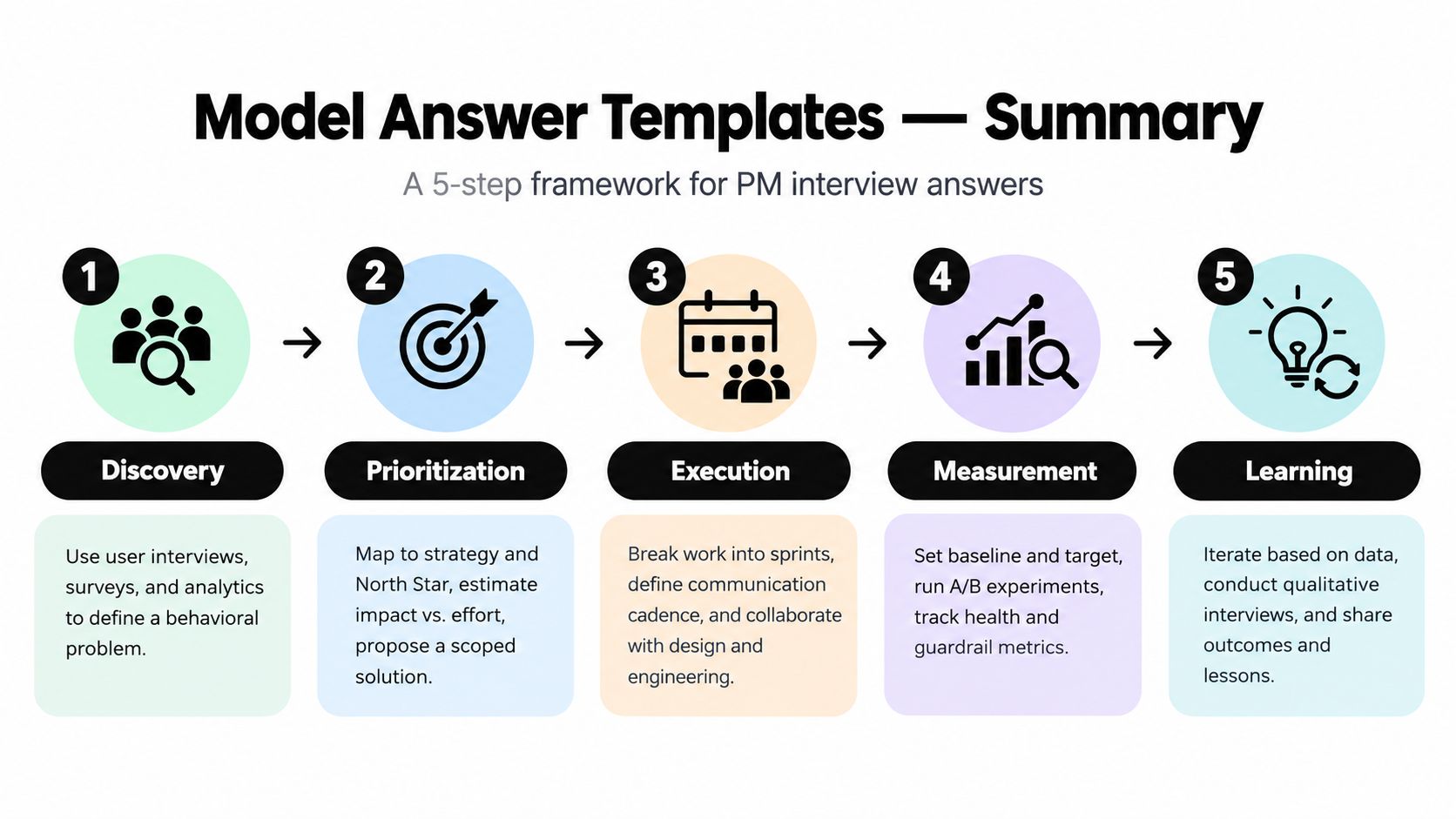
A good structure keeps an answer focused without turning it into a memorized performance. The most useful pattern follows the actual product decision cycle:
Discovery: Explain the user problem, evidence, and affected segment.
Hypothesis and prioritization: State the belief, alternatives, constraints, and reason for choosing one path.
Execution: Describe collaboration with engineering, design, and stakeholders, including scope changes.
Measurement: Give the baseline, target, primary outcome, and guardrails.
Learning: Explain what happened, what changed, and what the candidate would do differently.</li>
A candidate answering a prioritization question might begin by clarifying the user and business problem, define success, compare options against explicit constraints, choose one, and describe validation. This is stronger than reciting RICE, MoSCoW, or another framework without showing why the criteria fit the situation.
The same structure works for behavioral answers, with a little more emphasis on the candidate's personal actions. Ask, “What did you personally decide?” and “What did your team do because of your influence?” That prevents a polished group success from being mistaken for individual capability.
Quantification is useful when it is real and relevant. Candidates should use adoption, conversion, retention, revenue, defect rates, delivery time, or other measures only when they can explain the baseline and how the result was measured. Interviewers should never reward fabricated precision.
For AI-related roles, extend the structure with operational judgment. Ask when the candidate would not use AI, what error or bias would be unacceptable, how human review changes cost and workflow, and how the team would monitor the feature after launch. The strongest answer connects model behavior to customer value, risk, privacy, accessibility, and regional data quality. It doesn't stop at naming a tool.
Candidates who want to refine their opening narrative can also craft a 90-second pitch, but the pitch should support the evidence in the rest of the interview rather than substitute for it.
10-Item PM Interview Questions & Answers Comparison
Turn answers into a consistent hiring decision
A structured process gives a CTO, product leader, recruiter, and engineering partner a shared definition of a strong PM. Use the same predefined questions in the same order where practical, record scores before discussing impressions, and assign each interviewer a clear competency to evaluate. A compact loop can cover product sense, metrics, strategy, execution, technical collaboration, and behavioral ownership without repeating the same general conversation.
Score six signals for every candidate:
Evidence quality: Did the candidate provide a specific situation, decision, action, and result?
Outcome ownership: Can they connect their work to a meaningful product or business outcome?
Trade-off judgment: Did they explain constraints, alternatives, and what they chose not to do?
Technical partnership: Did they show respect for engineering expertise and understand technical implications?
Communication: Can they make a complex decision clear to executives and distributed teams?
Learning: Did they identify an incorrect assumption and change their practice?</li>
Use anchored descriptions for each score. A strong answer should include customer or usage evidence, a defined decision, relevant collaborators, a measurable outcome where available, and a candid reflection. An acceptable answer may show sound judgment but limited scope or incomplete measurement. A weak answer stays at the level of activities, frameworks, or team language.
Structured interviews have a stronger predictive relationship with future performance than informal conversations. A 2025 assessment review summarized in the available research found that structured interviews explain about 32% of variance in future job performance, compared with roughly 4% for unstructured interviews, as reported in the assessment review. The practical implication is straightforward. Don't replace judgment with a rigid script, but do standardize the evidence you ask candidates to produce.
A separate source reports a predictive-validity coefficient of approximately 0.51 for structured interviews versus approximately 0.38 for unstructured interviews, reinforcing the value of consistent questions and scoring in hiring processes (structured product-manager interview guidance). Use that consistency to widen the talent pool, including candidates in LATAM, without lowering the bar or treating location as a proxy for capability.
Before the debrief, each interviewer should write one strength, one concern, and the evidence supporting both. Separate scope from seniority. A candidate may have worked on a smaller product but demonstrated excellent judgment, while a candidate from a larger company may have had more resources and less personal ownership. Ask whether the person has operated at the level the role requires, not whether their previous title sounds impressive.
For a practical case, give the candidate an ambiguous product problem and require this sequence: clarify the problem, define the business objective, identify the user segment, state assumptions, diagnose the situation, propose alternatives, prioritize one, and define success criteria. This approach tests reasoning under constraints rather than framework recall.
Remote hiring also benefits from artifacts. A short product critique, prioritization exercise, written decision memo, or metric interpretation task can reveal how the candidate works when nobody is performing in front of a room. The exercise should be role-specific, time-bounded, and scored against the same rubric as the interview.
Companies expanding their search across Latin America can use IT recruitment services or an RPO model to support sourcing and process coordination, while retaining control of the competency scorecard. GENTY recruitment offers tech and sales recruitment, RPO, and salary benchmarking for companies building distributed teams, so the engagement should be evaluated against the actual hiring scope and process needs.
The best product manager interview questions and answers don't produce a perfect performance. They reveal how a candidate thinks when the problem is unclear, the data is incomplete, stakeholders disagree, engineering capacity is limited, and the first release teaches the team something unexpected. Build your process around those conditions, and your hiring decision will rest on observable product judgment rather than confidence alone.
GENTY recruitment helps companies hire product managers and other tech and sales professionals across Latin America through skill-first recruitment, RPO, and talent intelligence. If you're building a distributed PM or engineering team, visit GENTY recruitment to discuss a structured search aligned with your interview scorecard.