
Hiring for OFAC compliance means two jobs at once: finding a sanctions specialist who can run your screening program, and making sure every remote hire you bring on, in any country, passes your own sanctions controls. For a US or European tech company, the strongest approach is to define the role by its real scope (analyst, advisor or officer), price it against actual US postings, assess candidates on hands-on alert work rather than titles, and build the hiring process itself so that identity and payment checks are part of it. A specialist recruiter that sources pre-vetted talent in Latin America can fill the surrounding compliance, engineering and operations roles in the same timezone band as your US team.
TL;DR
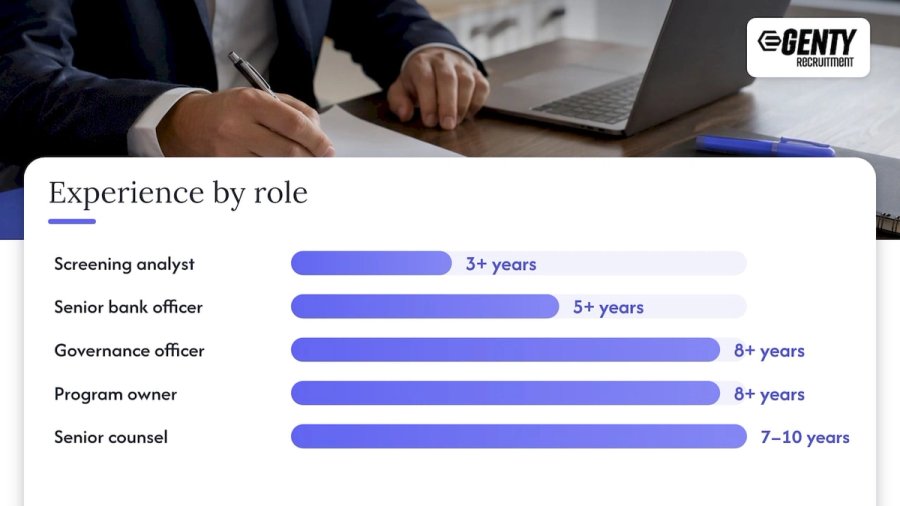
- OFAC roles split into three levels: screening analyst (3+ years), sanctions advisor or senior counsel (7 to 10 years), and sanctions officer who owns the whole program (8+ years).
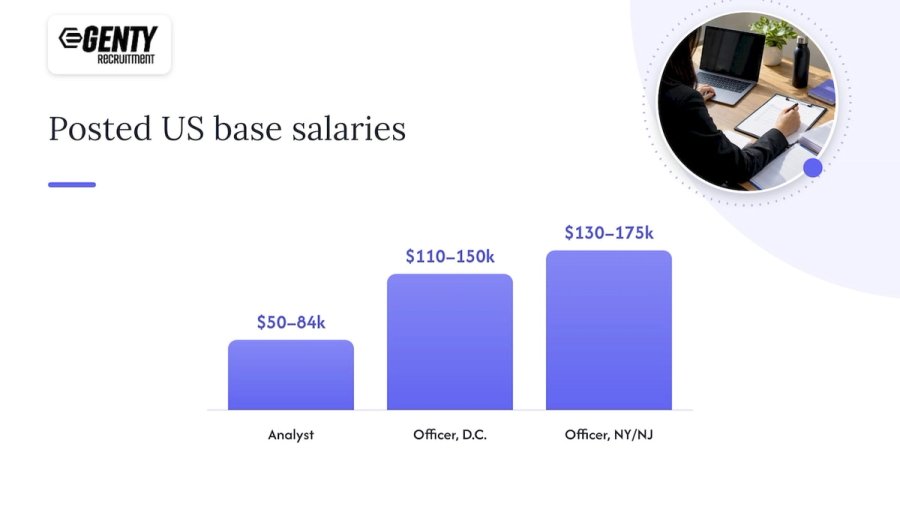
- Published 2026 US base pay runs from $50,000 to $84,000 for an analyst and up to $175,000 for a senior governance role in New York.
- Assess candidates on alert investigation, escalation and screening tuning, not on certifications alone.
- Remote hiring carries its own sanctions exposure: verify identity, avoid crypto payroll and monitor logins for multi-country IPs.
- GENTY recruitment delivers curated shortlists within 7 days for LATAM roles, from $2,999 per hire, with a 3-month replacement guarantee.
What an OFAC compliance hire actually does
The Office of Foreign Assets Control (OFAC) is the US Treasury office that administers economic sanctions. Any US company, and any company dealing with US persons or dollars, must avoid transacting with sanctioned countries, entities and individuals. An OFAC compliance professional is the person who makes that avoidance work in practice.
At analyst level, the work is screening customers, vendors and transactions against the SDN list, investigating matches, maintaining sanctions policies and delivering training. The SDN list is OFAC’s Specially Designated Nationals list, the best-known register of blocked parties. A true hit means you cannot proceed with the transaction, and that is why the analyst’s judgment on a false positive versus a real match carries legal weight.
Postings show how the scope widens with seniority:
What do you need?
Choose the hiring path that fits
After reading "OFAC Compliance Hiring: Roles, Salaries and Screening", most teams compare these options before deciding how to hire.
- Screening analyst. Pathward’s OFAC Sanctions Screening Analyst II is the primary escalation point for complex screening alerts across the SDN List, the Consolidated Sanctions List and Sectoral Sanctions programs, with final determinations on complex dispositions.
- Advisor. SoFi’s Sanctions Advisor sits in the second line of defense, running sanctions risk analyses, escalating investigations including cryptocurrency, and tuning and testing payment and name screening. The same posting makes the advisor the enterprise subject matter expert for product managers and engineers.
- Officer. Polymarket’s Sanctions Compliance Officer owns policies, controls, the screening framework, escalation standards, technology and governance, and builds a standalone team to review alerts.
- Counsel. SoFi’s Senior Counsel role adds license applications, voluntary self-disclosures and responses to OFAC subpoenas, which is why it requires a J.D. and active bar membership.
For a startup, the practical lesson is that “OFAC compliance hire” is not one job. A 40-person payments company rarely needs a head of sanctions on day one. It usually needs an analyst who can run screening well, plus a defined path to outside counsel for the rare complex case.
Match the role to your company stage
Before you write a job description, decide which of these problems you actually have.
You are launching a product that moves money
If you are a fintech, a crypto platform or a marketplace with payouts, regulators expect screening of customers and transactions from the start. The advisor profile fits best: someone who can sit with product managers and engineers and design controls into the product lifecycle. The crypto payments compliance playbook gives a useful sense of how a 90 to 180 day compliance build is sequenced for businesses that accept digital assets, which helps you scope what this first hire must deliver.
You have screening software but a growing alert backlog
This is an analyst problem. You need people who clear alerts accurately and document dispositions. This is also the layer where nearshore hiring is most effective, because the work is repeatable, reviewable and benefits from live collaboration with a US compliance lead during overlapping hours.
You have no program owner
This is the officer problem. Polymarket’s own hiring team stresses the role is not purely advisory: the officer must establish operating procedures, staff and manage the screening team, set productivity and quality standards and keep improving screening effectiveness. If your candidate has only written policies and never run a queue, they are an advisor, not an officer.
Qualifications to put in the job description
Requirements in current US postings cluster by seniority. Use them as a calibration, not a copy-paste template.
CAMS is the Certified Anti-Money Laundering Specialist credential and CGSS is the Certified Global Sanctions Specialist credential. Both are signals, not substitutes for hands-on alert experience.
Two details are worth copying into your own postings. First, SoFi expects familiarity with OFAC regulations in 31 C.F.R. Chapter V and with OFAC’s “A Framework for OFAC Compliance Commitments” when designing a program. Naming that framework in your job description tells strong candidates you understand what a program should contain. Second, UBS asks for familiarity with EU and UK regimes alongside OFAC, which matters if your company is a US startup with European customers or a European company with US exposure. Gunvor goes further for commodities and shipping, where ownership analysis and transaction risk assessment are core, so add sector experience when your risk sits in one industry.
What OFAC compliance talent costs in the US
Pay varies sharply by seniority and city. Published 2026 ranges give you a defensible budget:
The Pathward range depends on experience, skills and location, and the UBS ranges are indicative gross base salaries that may come with variable compensation. Salaries move with the market, so treat these as 2026 reference points and check live postings before you set an offer.
The gap between an analyst at $50,000 and a governance officer at $175,000 is where distributed hiring changes the math. Screening, KYC file review and alert investigation roles do not need to sit in New York. Argentina, Brazil, Colombia and Mexico all have professional pools in finance and risk, and GENTY recruitment’s published position is that clients save up to 40% compared with US or European hiring. For engineers who build and tune your screening integrations, our fintech salaries in Latin America guide shows how compensation compares by country and seniority.
How to assess sanctions experience
Certifications and years of experience tell you little about whether someone can clear a hard alert at 4 p.m. on a Friday. The most useful assessment framework in the research comes from the Polymarket posting, which lists what the role actually demands. Turn it into interview questions:
- Alert handling. “Walk me through the last alert you escalated. What made it a true match, and who made the final call?” Look for investigation steps, escalation and disposition, including blocked or rejected transaction analysis.
- Screening systems. “How did you tune matching logic, and what happened to your false-positive rate?” Strong candidates talk about list management, testing and QA/QC, not just tools.
- Operating metrics. “What productivity and quality standards did you set for your team?” This separates officers from advisors.
- Regulatory outcomes. “Describe an exam or audit where you presented your screening program.” SoFi’s advisor role includes preparing materials for regulatory examinations and audits.
- Reporting rules. Ask what happens after a true match. A well-prepared candidate knows that credit unions, for example, must report all blockings to OFAC within 10 business days and hold blocked assets in a separate blocked account, and that rejected prohibited transactions are reported on the same timeline.
- Recordkeeping. OFAC’s ten-year recordkeeping rule took effect March 12, 2025, requiring persons engaged in sanctions-subject transactions to keep full and accurate records for ten years. A candidate should be able to explain what that does to their documentation habits.
Score each answer on a simple 1 to 4 scale and keep the same questions for every candidate. A written case study on a realistic alert (a customer name that partly matches an SDN entry, with a different country and date of birth) shows judgment better than any résumé line.
Screen your own hires for sanctions risk
The other half of OFAC compliance hiring is about every person you bring on, not only the compliance team. This is especially relevant to tech, crypto and AI companies hiring remote engineers.
Stankie Law’s October 2025 guidance on North Korean remote workers is direct about the pattern: tech, crypto and AI companies are constant targets for infiltration by operatives posing as freelance or remote developers. Paying such a worker can create a sanctions violation even if you never knew who they were. The firm recommends enhanced due diligence for remote hiring, summarized here as a checklist you can add to your process:
- [ ] Conduct video interviews with an unobscured background and watch for deepfake signs.
- [ ] Verify education and employment history directly with the institutions and employers.
- [ ] Avoid paying in virtual currency.
- [ ] Disable remote desktop tools on company hardware.
- [ ] Monitor login patterns for multi-country IP addresses.
- [ ] Run periodic audits, internally or with outside counsel, and open an internal investigation when red flags appear.
- [ ] Report suspicious activity to the FBI or OFAC promptly, and ask counsel whether a voluntary self-disclosure to OFAC is needed.
The last two items belong with your lawyer. If a red flag appears, your sanctions counsel or a qualified attorney decides on self-disclosure, not your recruiter and not your engineering manager.
Enforcement makes this concrete. Paul Weiss counts 14 public OFAC enforcement actions in 2025, including cases against broker-dealers and cryptocurrency platforms that failed to implement IP and geolocation controls. The controls you apply at hiring, such as geolocation checks on logins, are the same controls regulators look for in operations.
Why LATAM works for compliance-adjacent hiring
Most startups do not hire one OFAC specialist in isolation. They hire a team around the problem: backend engineers who integrate screening APIs, data specialists who reduce false positives, DevOps engineers who keep logging and access controls tight, and operations staff who work alerts. This is where Latin America is a strong fit.
- Timezone alignment. Colombia shares US Eastern time, Mexico City sits in the Central band, and Argentina and Brazil are within an hour or two of Eastern depending on daylight saving. Your US EST and PST teams get real overlap for stand-ups, escalations and same-day alert reviews, which an offshore team in another continent cannot offer.
- Fintech depth. Brazil, Mexico, Colombia and Argentina each have large fintech ecosystems, so candidates often already know payments, KYC and regulated-product development.
- English proficiency. Technical and operations candidates in these markets commonly work with US companies in English, which matters when documenting alert dispositions that an examiner may read.
- Cost. Compensation sits well below US levels for comparable seniority, in line with the up to 40% saving GENTY recruitment reports for its clients.
A clear governance rule applies: keep final sanctions determinations, program ownership and regulator contact with accountable people under your US compliance structure, and use distributed talent for the engineering, data and operations work that supports them. If you are building a fintech team, see how we approach FinTech recruitment in LATAM, and for the broader process risk, our guide to recruitment risk management for tech companies covers where hiring programs go wrong.
A hiring plan you can run this quarter
- Define the scope in one paragraph. Which products move money, in which countries, and who currently reviews alerts?
- Choose the level. Analyst, advisor, officer or counsel, using the table above.
- Set the budget from live postings. Use the 2026 ranges here as a starting point and add bonus eligibility for senior roles.
- Run structured interviews. Use the six questions and a written alert case study.
- Verify identity before any offer. Apply the remote-hire checklist to every candidate, in compliance and in engineering.
- Pay through a documented channel. No virtual currency payroll, and keep records for the ten-year retention period.
- Review quarterly. Audit access logs, login geography and screening performance.
Perspective
Founders usually ask us about sanctions when a bank partner or an auditor raises it, and by then the team is already distributed. The better order is to design the hiring process with the control in mind: a clear role scope, a skill-first assessment and a shortlist of candidates who have already been vetted before your team spends interview hours.
That is how we build shortlists at GENTY recruitment. Our recruiters work exclusively in Latin America, each dedicated to a vertical such as FinTech, AI, SaaS and Web3, and every shortlist is triple-vetted. For a CTO hiring the engineers who sit behind your screening stack, or a sales leader building a team in a regulated market, that focus saves weeks and reduces the guesswork about who is actually behind the résumé.
Our fixed fee per seniority level and the 3-month replacement guarantee mean the cost of hiring is known on day one, and that is what lets a growing company plan a compliance build instead of reacting to one.
Eugene
Hire the surrounding team through GENTY recruitment
Once your OFAC owner is in place, the next constraint is usually engineering and operations capacity. GENTY recruitment places software engineers, DevOps and data specialists, sales teams and operations talent from Argentina, Brazil, Mexico, Colombia, Chile and more, with curated shortlists within 7 days, no upfront payments and a 3-month replacement guarantee. IT Recruitment starts from $2,999 one-off per hire, and Staffing starts from $99 per month per employee. For senior program leadership, see our Executive Search service.
Tell us the role and the stack at gentyrecruitment.io and we will scope the shortlist.
FAQ
Do I need a full-time OFAC specialist at a startup?
Not always. If your product moves money or serves customers across borders, you need someone accountable for screening, and that is often an analyst or advisor with outside counsel on call. Full-time program owners appear when alert volume, product complexity or regulator attention grows.
What experience should a screening analyst have?
Pathward’s posting asks for 3+ years of OFAC sanctions compliance or screening experience, a related bachelor’s degree and banking experience, with CAMS or CGSS preferred. Prioritize hands-on alert investigation and documentation over the certificate itself.
Can I hire remote developers from Latin America without sanctions exposure?
Yes, with a controlled process. Verify identity and employment history directly, use video interviews, pay through documented channels rather than virtual currency and monitor logins for unusual multi-country IP activity. Ask your sanctions counsel to confirm the controls fit your business.
How long must I keep sanctions records?
OFAC’s recordkeeping rule, effective March 12, 2025, requires ten years for persons engaged in transactions subject to US sanctions. Build that retention period into your hiring and payment documentation.
Sources
- OFAC Sanctions Compliance Analyst Job Description, GlobalTradeJobs
- Sanctions Compliance Officer, Polymarket
- Senior Sanctions Americas Governance Officer, UBS
- Sanctions Officer, Gunvor
- Corporate Compliance Sanctions Senior Officer-Associate, JPMorganChase via Built In
- We have a hit on the OFAC List. Now what?, America’s Credit Unions
- Economic Sanctions and Anti-Money Laundering Developments, 2025 Year in Review, Paul Weiss
- Navigating OFAC Sanctions Risks From North Korean Remote Workers, Stankie Law