

Nearshore software developers are engineers who work from a nearby country in your time zone band, and for US companies that means Latin America: Mexico, Colombia, Argentina, Brazil and Chile. The model works when you hire for skill first, pick the country by overlap with your own hours, and treat the new engineers as full members of your team from week one. At GENTY recruitment, we place pre-vetted LATAM engineers with US and European tech companies for a fixed fee per hire, so the hiring risk sits with us and not with your engineering managers.
TL;DR
- Nearshoring means extending your engineering organization into Latin America, where working hours overlap with US Eastern and Pacific time, so standups, pairing and incident response happen live.
- Pick the country by overlap, talent depth, English level and cost: Colombia and Mexico for tight Eastern and Central alignment, Brazil for the largest pool, Argentina for senior depth.
- Build the team in a sequence: define roles, choose a hiring model, source and vet on skills, then onboard with the same rituals as your US staff.
- Integration decides the outcome: shared tooling, a fixed overlap window, written decisions and an on-call rotation that includes everyone.
- GENTY recruitment delivers curated shortlists within 7 days, with fixed fees from $2,999 per hire, no upfront payments and a 3-month replacement guarantee.
What nearshore software developers actually are
Nearshoring is the practice of moving engineering work to a nearby country rather than to the other side of the world. Deloitte describes it as a way for US companies to extend product engineering teams into Latin America while keeping real-time collaboration intact. The same page notes that Brazil and Mexico together have more than 2.2 million software engineering professionals and graduate over 350,000 new engineering students each year.
There are three common shapes for a nearshore engineering team:
- Direct hires through a recruiter. You choose each engineer, and they work as part of your team under your roadmap and your management. This is how most funded startups build a team they intend to keep.
- Staffing. A provider employs the engineer and you pay a monthly fee per person, which suits teams that want payroll and local compliance handled for them.
- Project outsourcing. A vendor owns delivery of a scope. Your engineers do not report to you, which is a different arrangement from building a team.
This article is about the first two, because they are the ones that give you a team rather than a deliverable. Our guide to nearshore outsourcing companies covers the third in more depth.
What do you need?
Choose the hiring path that fits
After reading "Nearshore Software Developers: How to Build a LATAM Team", most teams compare these options before deciding how to hire.
Why time zone is the main reason to nearshore
Cost gets the budget approved, but time zone is what makes the team work. A peer-reviewed 2021 study by Oxford Saïd Business School researchers Looi and Szepan, based on a survey of 80 outsourcing customers, found that development within five hours of time difference produced statistically significant advantages over farshore work. The advantages included overall success, lower cost, lower project-management effort, better schedule adherence, higher quality and fewer communication problems. The researchers recommend favoring nearshore for communication-intensive and Agile projects.
The finding that matters most for a CTO is that temporal distance proved a bigger driver of outcomes than the development methodology itself. One manager in the study moved the same team from a nearshore to a farshore arrangement and saw lower efficiency and more communication problems, despite an established rapport.
In practice, this is what LATAM gives you:
- Colombia, Peru and Panama sit on Eastern-equivalent time and do not shift for daylight saving, so East Coast teams get a full working day in common for much of the year.
- Mexico works on Central-equivalent hours, which gives a Pacific-time team the strongest overlap of any large LATAM market.
- Brazil and Argentina run a couple of hours ahead of Eastern time for part of the year, which still leaves a solid afternoon window with both US coasts.
A fixed overlap window of four to five hours covers standups, code review hand-offs, design discussions and incident response. Everything else can run asynchronously without friction.
Choosing the country
Deloitte suggests weighing talent supply, English capability, competition for talent, the graduate pipeline, risk, business climate, infrastructure, proximity and operating cost when selecting a Latin American location. Here is how we apply that to the four markets our clients ask about most.
If your team needs a deeper look at language, our piece on LATAM English proficiency explains how to assess it in the interview rather than from a certificate.
Most companies do not hire from only one country. A common pattern is a Colombian or Mexican core for daily overlap, with Argentine and Brazilian specialists added for senior infrastructure, mobile or data work.
What nearshore teams cost
Nearshore compensation depends on the country, the stack and the seniority, and published averages vary widely depending on the survey, so treat any single number with caution. Two cost components make up the real comparison with a US hire:
- Salary and benefits. LATAM salaries for comparable roles run well below US levels. GENTY recruitment’s own position is that clients save up to 40% compared with US or European hiring, once recruiting fees, salary and employment costs are counted together.
- Recruiting cost. Our fixed-fee model starts at $2,999 one-off per hire for recruitment, and staffing starts at $99 per month per employee. Fees are set by seniority level, and nothing is paid upfront.
Before you open a requisition, build a salary range by role and country. Our salary benchmarking service produces custom reports for the roles you plan to open, so the offer you make matches the market in Bogotá, Mexico City, São Paulo or Buenos Aires rather than a generic regional average.
How to build a nearshore engineering team, step by step
1. Define the roles around the work that needs real-time contact
Deloitte points to front-end development, real-time data-pipeline work, and the interaction between machine-learning engineers and data scientists as work that benefits from nearshore real-time interaction. Start there. Write each role as outcomes for the first six months, the stack, the seniority and the overlap hours you require.
A common mistake is hiring a single isolated engineer into a team that has no one to pair with. Where possible, hire two engineers in the same country so they can review each other’s work during hours when your US staff are offline.
Our IT recruitment practice works with dedicated recruiters per vertical, covering software engineers, DevOps and data specialists across FinTech, AI, SaaS and Web3.
2. Choose the hiring model
Decide how engineers will be employed before you source, because it shapes the offer. Direct hiring through a local entity or an employer-of-record arrangement gives you the most control. Staffing at a monthly fee per employee removes the need to set up local payroll. Our remote staffing guide compares the two so you can match the model to your plan for the next 12 months.
3. Source and vet on skills, not résumés
Passive job ads attract volume, not fit. Our process is skill-first: candidates are triple-vetted before they reach you, and you receive a curated shortlist within 7 days. For you, this means your engineering managers spend their interview hours on three or four finalists instead of screening forty applications.
Whatever route you take, a vetting loop for senior engineers should cover:
- a technical conversation on a system the candidate actually built;
- a practical exercise with a time limit that reflects your stack;
- a spoken English check conducted by an engineer, not a recruiter, so it tests technical communication;
- a reference conversation focused on how the candidate works with remote teams.
Our developer hiring guide goes through each stage with example questions.
4. Make the offer and close the hire
LATAM engineers with strong English are in demand, and good ones hold more than one offer. Move from final interview to offer within a few days, state the compensation in US dollars or local currency clearly, and describe benefits such as paid time off in terms the candidate can compare with local norms. Our 3-month replacement guarantee covers the placement if a hire does not work out in the first three months.
5. Onboard on a localized, personal plan
Deloitte advises companies entering Latin America to develop localized, personalized recruiting and onboarding and a realistic workforce ramp plan with hiring targets and leadership ratios. For a small team, that translates to a 30-60-90 day plan for each engineer, a named buddy on the US team, and a first pull request merged in the first week.
Integrating a nearshore team into your engineering organization
Integration is where nearshore programs succeed or fail, and the technique is more about habits than about tools. These are the practices we recommend CTOs put in place before the first engineer starts.
Give everyone the same system of record
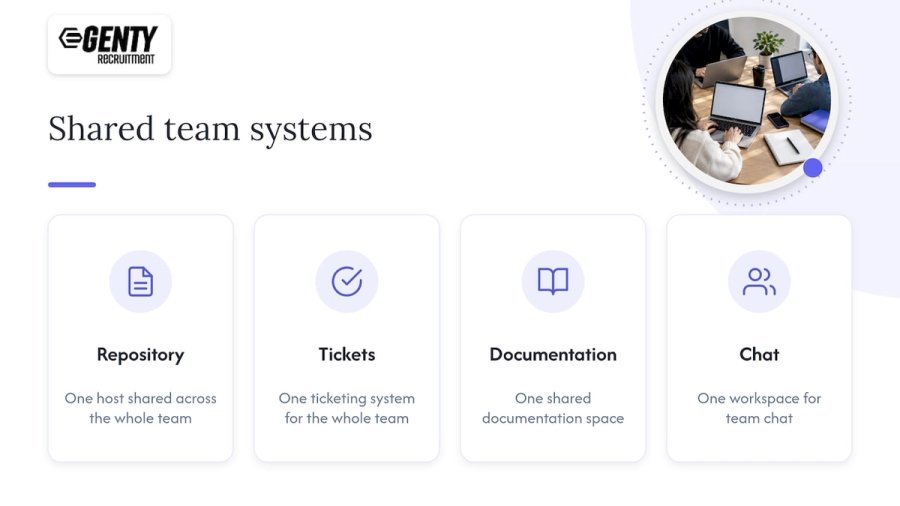
One repository host, one ticketing system, one documentation space and one chat workspace for the whole team. If decisions made on a call are not written in the ticket or document afterward, the engineers who were not on the call lose context. Make that a rule for every meeting.
Anchor the day with a shared window
Pick a window, for example 10 a.m. to 2 p.m. Eastern, and keep standups, planning, reviews and pairing inside it. Outside it, people work independently. This keeps US managers from defaulting to early-morning or late-evening calls, and it makes the overlap a feature rather than an accident of geography.
Put nearshore engineers on the same on-call rotation
Time-zone alignment means LATAM engineers can respond to production incidents during US business hours and sometimes beyond, so include them in the rotation with the same runbooks and escalation paths as everyone else. Whatever service you use, uptime monitoring for DevOps teams with alerts via email, SMS and voice and shared status pages lets every on-call engineer see the same incident at the same time.
Review code the same way for everyone
Set the same standard for pull requests, test coverage and release approvals. Rotate reviewers across both sides so knowledge moves in both directions. Teams that route all senior review through one US lead create a bottleneck and a two-tier culture.
Run a visible career path
Retention is the hidden cost of any remote team. Give LATAM engineers the same leveling framework, performance reviews and access to promotion as US colleagues. Engineers who see a path stay, and continuity is worth more than a small rate difference.
A checklist before you hire your first nearshore engineer
- [ ] Roles written as six-month outcomes with a required overlap window
- [ ] Country shortlist chosen by time zone, talent depth and English level
- [ ] Salary range benchmarked per country and seniority
- [ ] Hiring model decided: direct hire, employer of record or staffing
- [ ] Vetting loop with a practical exercise and a spoken English check
- [ ] Laptop, security access and tool accounts ready before day one
- [ ] A named buddy and a 30-60-90 day plan for each hire
- [ ] Shared documentation, ticketing and on-call rotation in place
- [ ] Written rule that decisions from calls go into tickets or docs
- [ ] A review date at month three to confirm the fit
Where GENTY recruitment fits
If you plan to build a LATAM team in the next two quarters, our IT recruitment service starts at $2,999 one-off per hire, with no upfront payment and curated shortlists within 7 days. Teams that prefer monthly staffing can start at $99 per month per employee through our recruitment and staffing services, and larger programs can move to recruitment process outsourcing for a continuous pipeline. Fees are fixed by seniority level and every placement carries a 3-month replacement guarantee.
For sales leaders building SDR and AE teams in the region, our sales recruitment practice follows the same model.
Our perspective
We built GENTY recruitment around one conviction: a nearshore team is only as strong as the first five hires. Time zone gets an engineer into your standup, but skill, English and fit decide whether they stay in it.
That is why we focus exclusively on Latin America, with dedicated recruiters for each vertical, and why every shortlist is triple-vetted before it reaches a hiring manager. A recruiter who knows how a FinTech backend role in Bogotá differs from a DevOps role in Buenos Aires finds the right engineer faster than a generalist working from job ads.
We also believe pricing should be as clear as the process. A fixed fee per seniority level, nothing upfront and a 3-month replacement guarantee let a founder plan headcount without guessing at a percentage of salary. Companies that pair that clarity with a disciplined onboarding plan build teams that last.
Eugene
FAQ
What is the difference between nearshore and offshore developers?
Nearshore developers work in a country close to yours with a similar time zone, while offshore developers work many time zones away. For US companies, nearshore means Latin America, where daily overlap makes live collaboration possible. Our offshore hiring guide covers the offshore side in more detail.
Which Latin American country is best for nearshore software developers?
It depends on your hours and stack. Colombia matches Eastern time most closely, Mexico suits Pacific and Central teams, Brazil offers the largest pool and Argentina is known for senior depth. Many teams combine two countries to cover both overlap and specialization.
How long does it take to hire a nearshore engineer?
With GENTY recruitment, a curated shortlist arrives within 7 days of kickoff. The remaining time depends on your interview schedule and the candidate’s notice period, so a fast decision process shortens the total.
How do I make a remote nearshore team feel like part of my company?
Give them the same tools, the same code review standards, the same on-call rotation and the same career framework as your US team. Keep a fixed overlap window and write down every decision made on calls.
Sources
- Software Engineering Nearshoring | Deloitte US
- Outsourcing in Global Software Development: Effects of Temporal Distance (Looi and Szepan, 2021)